'%20stroke='%23ADB7CD'%3e%3cg%20id='斜线'%20transform='translate(466,%20173)'%3e%3cline%20x1='0'%20y1='10'%20x2='5'%20y2='0'%20id='路径'%3e%3c/line%3e%3c/g%3e%3c/g%3e%3c/g%3e%3c/svg%3e)
Why High-Anonymity Residential Proxies Matter: The Core Logic Behind Stable and Trusted Network Access
Why High-Anonymity Residential Proxies Matter: The Core Logic Behind Stable and Trusted Network Access
'%20fill='%23ADB7CD'%20fill-rule='nonzero'%3e%3cg%20id='日期'%20transform='translate(428,%20369)'%3e%3cpath%20d='M15,2%20L19,2%20C19.2652,2%2019.5196,2.10536%2019.7071,2.29289%20C19.8946,2.48043%2020,2.73478%2020,3%20L20,19%20C20,19.2652%2019.8946,19.5196%2019.7071,19.7071%20C19.5196,19.8946%2019.2652,20%2019,20%20L1,20%20C0.73478,20%200.48043,19.8946%200.29289,19.7071%20C0.10536,19.5196%200,19.2652%200,19%20L0,3%20C0,2.73478%200.10536,2.48043%200.29289,2.29289%20C0.48043,2.10536%200.73478,2%201,2%20L5,2%20L5,0%20L7,0%20L7,2%20L13,2%20L13,0%20L15,0%20L15,2%20Z%20M13,4%20L7,4%20L7,6%20L5,6%20L5,4%20L2,4%20L2,8%20L18,8%20L18,4%20L15,4%20L15,6%20L13,6%20L13,4%20Z%20M18,10%20L2,10%20L2,18%20L18,18%20L18,10%20Z%20M4,13%20L6,13%20L6,15%20L4,15%20L4,13%20Z%20M8,13%20L16,13%20L16,15%20L8,15%20L8,13%20Z'%20id='形状'%3e%3c/path%3e%3c/g%3e%3c/g%3e%3c/g%3e%3c/svg%3e) February 2.2026
February 2.2026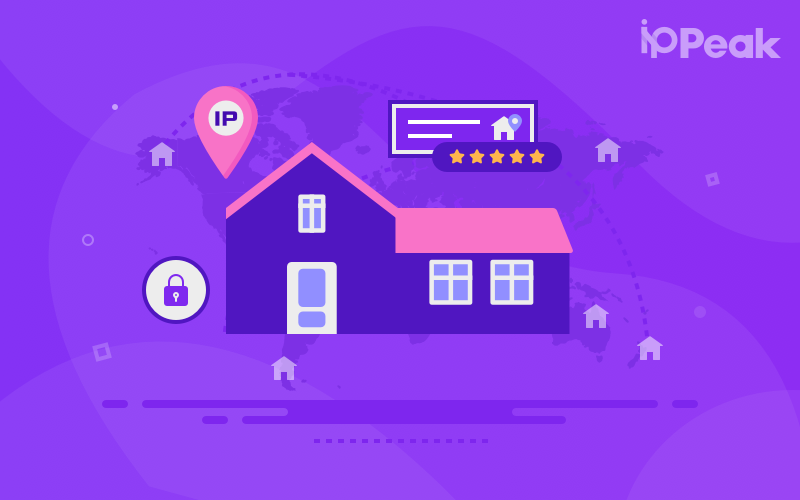
In the past, the primary role of proxy tools was to help users bypass regional restrictions or hide their real IP addresses. That was a relatively coarse stage, when network systems relied more on static rules for decision-making. As long as the exit IP was changed, many restrictions could be bypassed. By 2026, however, this logic has completely broken down.
Today’s network environment functions more like a dynamic evaluation system. Access behavior is no longer judged solely by where you come from, but by a combined analysis of who you are, whether you behave like a real user, and whether your connection aligns with normal network patterns. The IP address is now just one entry parameter—not the single decisive factor.
In this context, whether a proxy is “high-anonymity” is no longer a technical detail, but a core condition that directly determines success or failure of access.
What High Anonymity Really Means
Many proxy services emphasize “anonymity” in their marketing, but within real-world network identification systems, not all IP-hiding methods are treated as equally trustworthy. High anonymity does not simply mean that the target website cannot see your real IP address. More importantly, it means that no abnormal proxy characteristics are exposed across the entire connection chain.
A truly high-anonymity proxy closely mimics normal user access patterns at the protocol level, within request headers, and in overall connection behavior. This makes it difficult for servers to determine whether traffic is being relayed, or to infer the presence of a proxy through traffic signatures.
If a proxy merely replaces the exit IP while leaving obvious traces at other layers, it has little chance of surviving in modern risk-control systems.
The Fundamental Difference Between Data Center Proxies and Residential Proxies
In today’s environment, the source of an IP matters more than the IP itself. Data center proxies may offer high speed and low cost, but their address ranges are highly concentrated and reused by large numbers of users over long periods. These characteristics are highly visible to network identification systems and are easily labeled as “unnatural traffic.”
Residential proxies, by contrast, originate from real household networks. Their distribution is more decentralized, and their usage patterns more closely resemble those of ordinary users. Even in high-frequency access or long-lived connection scenarios, residential IPs are more likely to be regarded as part of normal network activity.
When “does this look like a real user” becomes the primary evaluation criterion, residential proxies naturally hold an advantage over data center proxies—and high-anonymity residential proxies represent a further optimization on top of that foundation.
Why High-Anonymity Residential Proxies Improve Long-Term Stability
Many users encounter the same issue when using ordinary proxies: they work at first, but fail quickly. This is not accidental. Network systems continuously evaluate connection behavior, and once an exit point is repeatedly identified as an abnormal source, its usability rapidly declines.
The value of high-anonymity residential proxies lies precisely in how difficult they are to identify as proxies. Thanks to their high IP authenticity and dispersed usage footprints, individual exit points are far less likely to be blocked due to short-term behavior.
From a long-term perspective, this stability is far more important than short-term speed or price. It reduces the cost of frequent IP switching and lowers the risk of service disruption or access interruptions.
How Proxy Service Quality Affects Anonymity
Not all residential proxies are inherently high-anonymity. If IP source management is disorganized, rotation strategies are poorly designed, or the same exit IP is overused, even residential IPs can quickly lose their credibility.
High-quality proxy services typically exercise fine-grained control over IP allocation, usage frequency, and connection behavior. While these controls may not be directly noticeable to users, they significantly influence how external systems evaluate and classify the traffic.
In practice, some users choose residential proxy services like IPPeak, which offers over 80 million residential IPs, precisely because of its positioning as a “long-term usable network environment” rather than a short-term bypass tool.
Conclusion
The importance of high-anonymity residential proxies does not stem from any single advantage, but from the broader evolution of modern network environments. Once networks begin to “understand” user behavior, simple IP substitution is no longer sufficient for long-term needs.
Truly stable, secure, and sustainable access is built on a credible network identity. High-anonymity residential proxies form a foundational component of that identity.
After 2026, this type of proxy will only become more widespread—not replaced.
You might also enjoy
In-Depth Analysis of Browser Fingerprinting: Identification Principles and Comprehensive Protection Strategies
Explains browser fingerprinting principles, detection methods, IP correlation, evasion challenges, and practical protection strategies for automation systems.
February 2.2026
Whoer.net Complete Guide: How to Accurately Check Your IP Anonymity and Network Identity in 2026
Learn how to accurately check your IP anonymity, network identity, and trust level, and understand what your IP reveals about your online privacy.
February 2.2026
Why High-Anonymity Residential Proxies Matter: The Core Logic Behind Stable and Trusted Network Access
Discover what true high-anonymity residential proxies are, how they differ from data center proxies, and why they ensure stable and secure long-term access.
February 2.2026
'%3e%3cg%20id='装饰物左'%20transform='translate(70,%20789.5)%20scale(-1,%20-1)%20translate(-70,%20-789.5)translate(0,%20674)'%3e%3cmask%20id='mask-2'%20fill='white'%3e%3cuse%20xlink:href='%23path-1'%3e%3c/use%3e%3c/mask%3e%3cg%20id='矩形'%3e%3c/g%3e%3cg%20id='bg-graphic-5'%20mask='url(%23mask-2)'%3e%3cg%20transform='translate(0,%20-23)'%3e%3cline%20x1='140.97459'%20y1='23.29327'%20x2='66.47459'%20y2='97.7934'%20id='路径'%20stroke='%23DFE6F3'%20stroke-width='1'%20fill='none'%3e%3c/line%3e%3cline%20x1='140.99959'%20y1='154.6709'%20x2='79.99999'%20y2='215.6709'%20id='路径'%20stroke='%23DFE6F3'%20stroke-width='1'%20fill='none'%3e%3c/line%3e%3cline%20x1='140.99959'%20y1='110.2705'%20x2='24.44919'%20y2='226.8209'%20id='路径'%20stroke='%23DFE6F3'%20stroke-width='1'%20fill='none'%3e%3c/line%3e%3cline%20x1='140.99959'%20y1='64.945'%20x2='0'%20y2='205.9449'%20id='路径'%20stroke='%23DFE6F3'%20stroke-width='1'%20fill='none'%3e%3c/line%3e%3cline%20x1='140.99959'%20y1='196.2959'%20x2='83.64959'%20y2='253.6469'%20id='路径'%20stroke='%23DFE6F3'%20stroke-width='1'%20fill='none'%3e%3c/line%3e%3cline%20x1='141.35359'%20y1='110.6238'%20x2='89.97929'%20y2='161.9979'%20id='路径'%20stroke='%237868E6'%20stroke-width='2'%20fill='none'%3e%3c/line%3e%3cline%20x1='164.70859'%20y1='0'%20x2='113.33459'%20y2='51.3743'%20id='路径'%20stroke='%237868E6'%20stroke-width='2'%20fill='none'%3e%3c/line%3e%3ccircle%20id='椭圆形'%20stroke='%237868E6'%20stroke-width='2'%20fill='%23E1DDFD'%20fill-rule='nonzero'%20cx='86.61909'%20cy='165.2909'%20r='5'%3e%3c/circle%3e%3cline%20x1='117.47459'%20y1='178.4359'%20x2='103.61959'%20y2='192.2909'%20id='路径'%20stroke='%237868E6'%20stroke-width='1'%20fill='none'%3e%3c/line%3e%3cline%20x1='69.83009'%20y1='136.2929'%20x2='55.97459'%20y2='150.1489'%20id='路径'%20stroke='%237868E6'%20stroke-width='1'%20fill='none'%3e%3c/line%3e%3ccircle%20id='椭圆形'%20stroke='%237868E6'%20stroke-width='2'%20fill='%23E1DDFD'%20fill-rule='nonzero'%20cx='109.97459'%20cy='54.6672'%20r='5'%3e%3c/circle%3e%3c/g%3e%3c/g%3e%3c/g%3e%3c/g%3e%3c/g%3e%3c/svg%3e)
'%3e%3cg%20id='装饰物右'%20transform='translate(1780,%20214)'%3e%3cmask%20id='mask-2'%20fill='white'%3e%3cuse%20xlink:href='%23path-1'%3e%3c/use%3e%3c/mask%3e%3cg%20id='矩形'%3e%3c/g%3e%3cg%20id='bg-graphic-5'%20mask='url(%23mask-2)'%3e%3cg%20transform='translate(0,%20-23)'%3e%3cline%20x1='140.97459'%20y1='23.29327'%20x2='66.47459'%20y2='97.7934'%20id='路径'%20stroke='%23DFE6F3'%20stroke-width='1'%20fill='none'%3e%3c/line%3e%3cline%20x1='140.99959'%20y1='154.6709'%20x2='79.99999'%20y2='215.6709'%20id='路径'%20stroke='%23DFE6F3'%20stroke-width='1'%20fill='none'%3e%3c/line%3e%3cline%20x1='140.99959'%20y1='110.2705'%20x2='24.44919'%20y2='226.8209'%20id='路径'%20stroke='%23DFE6F3'%20stroke-width='1'%20fill='none'%3e%3c/line%3e%3cline%20x1='140.99959'%20y1='64.945'%20x2='0'%20y2='205.9449'%20id='路径'%20stroke='%23DFE6F3'%20stroke-width='1'%20fill='none'%3e%3c/line%3e%3cline%20x1='140.99959'%20y1='196.2959'%20x2='83.64959'%20y2='253.6469'%20id='路径'%20stroke='%23DFE6F3'%20stroke-width='1'%20fill='none'%3e%3c/line%3e%3cline%20x1='141.35359'%20y1='110.6238'%20x2='89.97929'%20y2='161.9979'%20id='路径'%20stroke='%237868E6'%20stroke-width='2'%20fill='none'%3e%3c/line%3e%3cline%20x1='164.70859'%20y1='0'%20x2='113.33459'%20y2='51.3743'%20id='路径'%20stroke='%237868E6'%20stroke-width='2'%20fill='none'%3e%3c/line%3e%3ccircle%20id='椭圆形'%20stroke='%237868E6'%20stroke-width='2'%20fill='%23E1DDFD'%20fill-rule='nonzero'%20cx='86.61909'%20cy='165.2909'%20r='5'%3e%3c/circle%3e%3cline%20x1='117.47459'%20y1='178.4359'%20x2='103.61959'%20y2='192.2909'%20id='路径'%20stroke='%237868E6'%20stroke-width='1'%20fill='none'%3e%3c/line%3e%3cline%20x1='69.83009'%20y1='136.2929'%20x2='55.97459'%20y2='150.1489'%20id='路径'%20stroke='%237868E6'%20stroke-width='1'%20fill='none'%3e%3c/line%3e%3ccircle%20id='椭圆形'%20stroke='%237868E6'%20stroke-width='2'%20fill='%23E1DDFD'%20fill-rule='nonzero'%20cx='109.97459'%20cy='54.6672'%20r='5'%3e%3c/circle%3e%3c/g%3e%3c/g%3e%3c/g%3e%3c/g%3e%3c/g%3e%3c/svg%3e)
- Popular Blogs
© 2024 IPPeak. All rights reserved